Australia Day

January 26 is Australia Day, Australia’s national day. We have records that show some of Vancouver’s interactions with Australia and Australians. Here are a few examples.

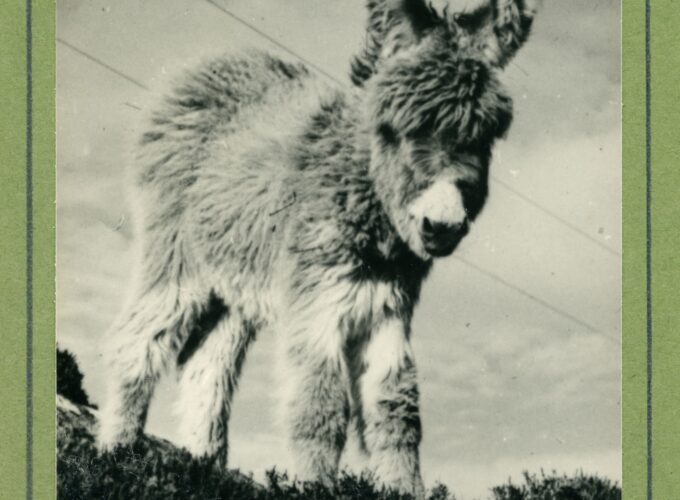
The Young Australia League is a youth organization founded in 1905 that promotes “education through travel”, among other activities. They stopped in Vancouver during their 1929 overseas tour, along with a burro they picked up in their travels.

Young Australia League with burro

Members of the Young Australia League with burro, May 1929. Stuart Thomson, photographer. Reference code AM1535-: CVA 99-2027

Continue reading

2012 Association of Moving Image Archivists Conference

In early December, I attended the annual conference of the Association of Moving Image Archivists (AMIA) in Seattle. Here are a few of the highlights.

Cinerama street view

The Cinerama has been restored to its 1963 space-age look. A showing of “Hendrix 70: Live at Woodstock” was a highlight outside of the conference program. Photograph: Sue Bigelow

The Association of Moving Image Archivists (AMIA) is a professional association for those involved in the preservation and access of moving image heritage. Members come from all over the world to attend the conference.

Ffmpeg workshop

There was an excellent workshop on uses of ffmpeg for archivists. Ffmpeg is open source, free software for working with multimedia files. One of the advantages for archives is that ffmpeg is always adding the capability of working with new types of files, but not getting rid of any old functionality. This means that if archivists encounter an outdated type of file, ffmpeg may be able to work with it. Ffmpeg software can analyze a file and report on all the different kinds of data inside. We store the original files in our digital archives but we also create another version using ffmpeg that can be viewed on a modern computer. Continue reading

Happy Holidays

The Archives will be closed from noon Monday December 24 to 9am Tuesday January 2.

Card from Mayor Rathie and Mrs. Rathie used 1963-66. Reference code PUB-: PDS 50

See you in the new year!

Spotlight on volunteers – Sean DeMaio

Sean DeMaio volunteered for us for three months in the fall of 2012. In this short period of time, he spent 100 hours at the Archives while still working at the Women’s Health Research Institute at the Research Branch of BC Women’s Hospital. Sean holds a Master’s degree from SFU in Health Policy, where he researched recruitment incentives of physicians in rural BC for his thesis. This led to his involvement in several interesting health research initiatives, such as doing research and writing a report showing the cost effectiveness of live music therapy for patients with Alzheimer’s disease. Health research work provided experience with data analysis and information management which is what Sean would like to refocus his career on. Volunteering at the Archives was a first step and getting a Masters of Library and Information Studies degree will be the next.

Catalogue card drawer CANADA A to CHI – conquered by Sean!

Catalogue card drawer CANADA A to CHI – conquered by Sean!

Continue reading

Exploring lenticular Kodacolor

The use of colour in film remains one of the longest and richest currents in the history of motion pictures. From tinting to toning, filmmakers have tried several incredible techniques to introduce colour into moving images almost since the medium’s beginnings. One special process that developed after a few decades was Kodak Kodacolor, which utilized lenticular technology to create a three-tone colour representation. Only produced for four years from 1928-1932[1], the Archives is lucky to house some of these rare and special films.

Lenticular Kodacolor under 6.4x magnification. Photo by Jesse Cumming.

Looking directly at the film with a naked eye, it appears no different than regular black and white 16mm film. This is because the colour information is encoded into a black and white film: no coloured dyes are used. Continue reading

Snipes on flickr

We’ve put images of our entire collection of lantern-slide snipes on flickr. They were collected by Major Matthews, the first City Archivist.

“The rebel maid” Montague F. Phillips will be presented by The Vancouver Opera Society under the direction of Jas. C. Welch, 1923, Reference code AM54-S4-: CVA 371-2806

“Snipes” refers to anything, other than trailers or features, shown in a movie theatre. Digitized versions of these glass snipes were shown before the program at our recent Vintage Vancouver screening at the Vancity Theatre.

We are conforming to all the laws and therefore should be patronized, ~1920, Reference code AM54-S4-: CVA 371-2793

Please take a look and feel free to use them in your own shows.

Correspondence through the decades at BC Sugar

Third in a series about the BC Sugar records

Office work has changed dramatically over the last few decades. This fact is driven home daily as I process 100 years of BC Sugar records. This is especially true with regard to the company’s correspondence, and I’d like to share my archivist’s observations on the way these records were produced and organized over the years. 

BC Sugar office interior circa 1920s. Reference code: AM1592-1-S2-F2: 2011-092.0400.

The vast majority of the correspondence created in most offices today is email. Most of us create new email threads every day without a thought to the medium’s rather short history and the convenience of this form of communication. Emails are sent around the world and between people who sit within a few steps of each other with the same ease and amount of thought. Not that long ago, office technology was very different. Continue reading

Remembering . . .

. . . the preparation . . .

29th Battalion Canadian Expeditionary Force training at Hastings Park, 1914. Stuart Thomson photo. Reference code AM1535-: CVA 99-155

Recruiting Station at Victory Square, 1941. Photographer unknown. Reference code AM54-S4-: Mil P265

Continue reading

Vintage Vancouver: Archival film from the City of Vancouver Archives

The City of Vancouver Archives is happy to announce Vintage Vancouver: Archival Film from the City of Vancouver Archives, November 18th 2012 at 2pm. This is the third in a series of screenings in collaboration with Vancity Theatre, exhibiting some of the finest selections from our moving images. Although you can view most of our moving images online, this is an exciting opportunity to see vintage Vancouver on the big screen with the advantage of curation, historical commentary, live accompaniment and the ability to share and laugh with a movie-loving audience (and maybe treat yourself to some popcorn).

Women in sailor suits in the Orpheum theatre, advertising the 1946 musical “Meet the Navy”. Reference Code: AM1184-S1-: CVA 1184-2292

Continue reading

Our Students – Rachel Sim

The City of Vancouver Archives was kind enough to adopt me as an intern this summer. Never before has twelve weeks passed by so quickly! During my time at the Archives, I had the pleasure of dabbling in a number of aspects of archival work, including some unexpected outreach work acting as a researcher in the Archives’ new instructional video.

Rachel hard at work as Researcher #1 in the Archives’ 2012 how-to video. Still from video.

Artistic expression aside, I can now proudly say that I have processed a group of records from start to finish, appraising, selecting, arranging and describing the records of Richard Dopson, a prominent member of the Vancouver gay community and an important individual in the development of gay sports in the city. Organizing the records created over the last 30 years of passionate involvement on the part of Mr. Dopson was no small task! Vancouver hosted the Gay Games in 1990 and Dopson was co-chair of this international event. Continue reading